Widtmann und Blume
Stolberg
Diepenlinchen Drainage Shafts
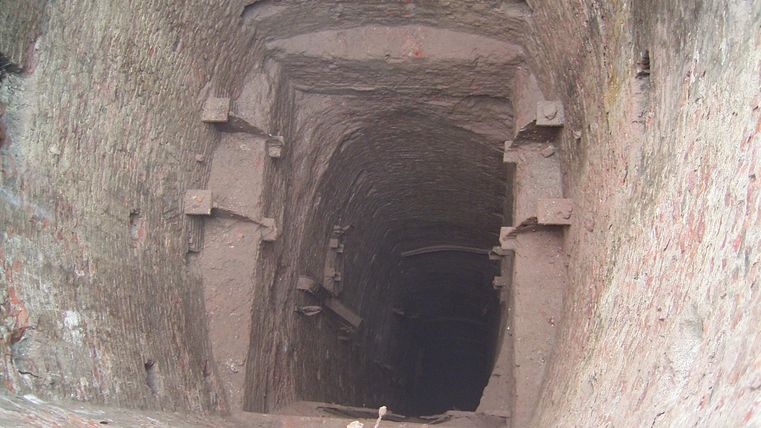
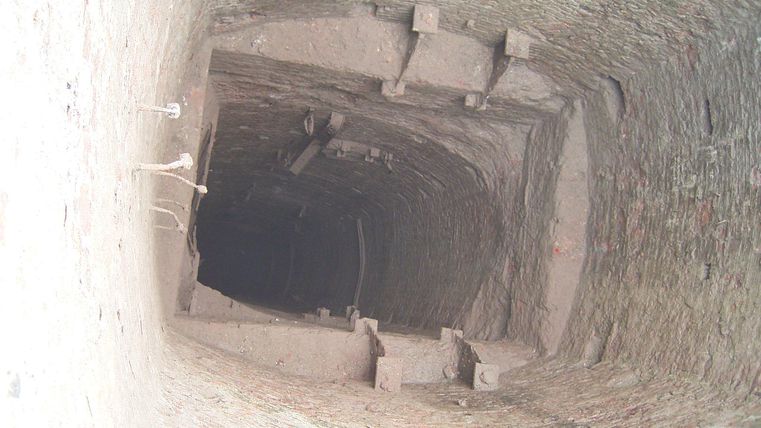
Since dewatering the mine had been a problem from the very beginning due to inflows averaging 9,000 liters per minute, a more cost-effective dewatering solution became necessary in 1855. That year, engineer Widtmann—after whom the Widtmann Shaft was named—designed a 2.4-kilometer-long drainage adit intended to divert mine water from a depth of 88 meters (corresponding to the elevation of the Vicht Valley) into the Vicht River. Since the mine had already been sunk to a depth of 159 meters by that time (1854), the water had to be pumped up only 71 meters. Work on driving the tunnel began in 1857, and sinking of the Widtmann Shaft began in 1855. The shaft had a fairly large cross-section of 5.65 m x 3 m, as it had to accommodate two pumping rods. The reason for this was that the corresponding pumping systems were constantly subjected to heavy loads, but water still had to be pumped out even while they were being maintained; for this reason, they were always serviced alternately. Furthermore, as the depth increased, the drainage shaft had to be driven deeper and deeper without interrupting the pumping of mine water. Neither of the shafts (Widtmann and Blume) was sunk into the water-bearing limestone (since they would otherwise have flooded during construction), but rather into the shale immediately adjacent to it, which did not contain water and could therefore be driven down relatively easily.
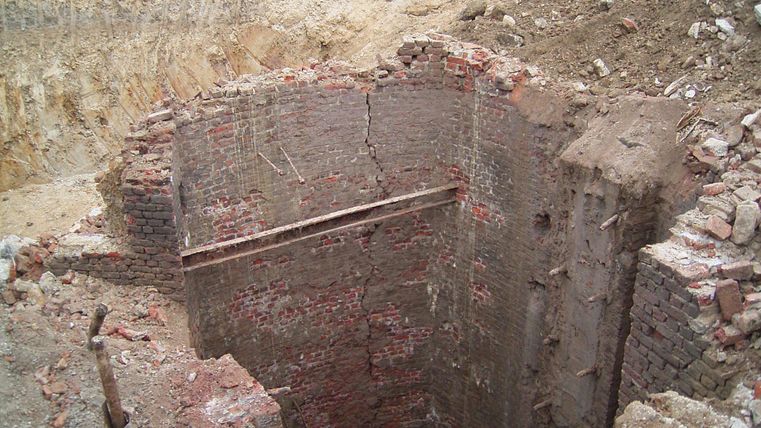
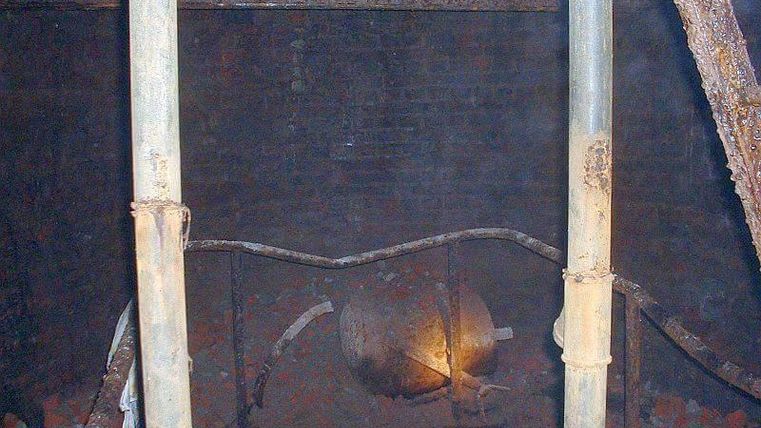
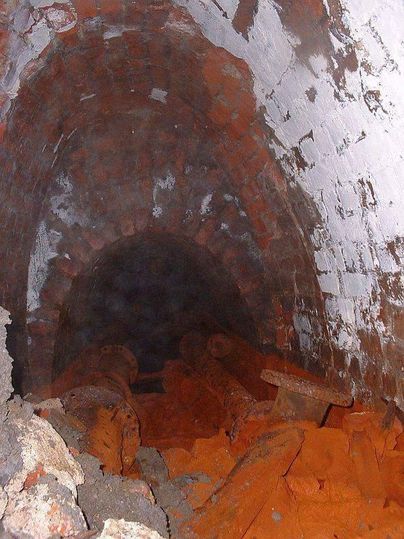
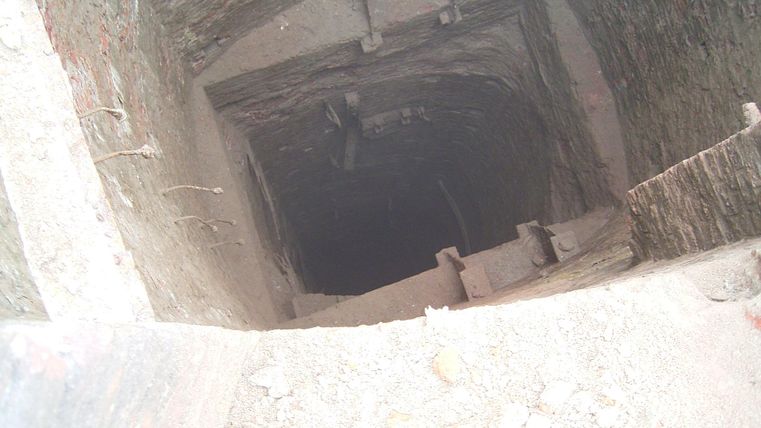
The Widtmann shaft was lined with bricks down to a depth of 150 m to ensure structural stability. As the depth increased, it became necessary to drive a second dewatering shaft, so work on the Blume shaft began in 1866. The shaft was named after Blume, the mine director at the time, and had a cross-section of only 2.5 m x 3.9 m; it was also lined only with bolted timber framing. Mine water was pumped out of both shafts using two steam engines, which in 1900 had a combined output of 2,000 PS and consumed 12,541 metric tons of coal. In 1912, a depth of 382 m was reached at the pump sump on the deepest level, making both shafts the deepest in the entire Stolberg coalfield. After the mine was closed, the shafts were not backfilled, as this would have jeopardized drainage through the dewatering tunnel.
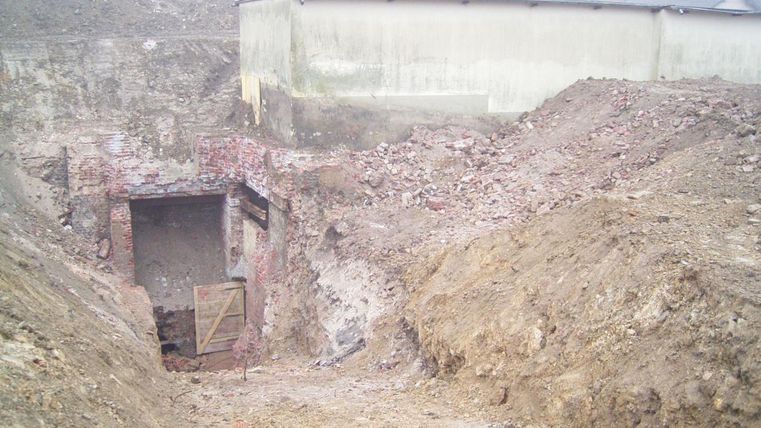
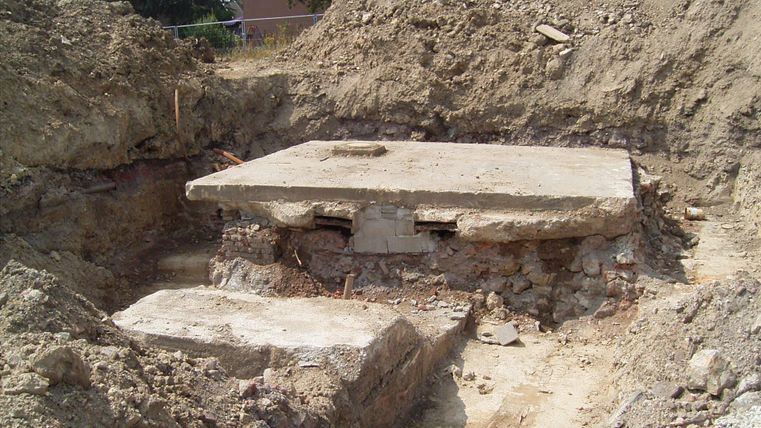
This would have resulted in unforeseeable mining damage. Instead, both shafts were covered with concrete slabs, and a small building was erected above the Widtmann shaft to allow for inspection of the drainage system. Both fell increasingly into oblivion until, during construction work in 2006, both shafts were uncovered and subsequently professionally sealed with a reinforced concrete slab each. Today, residential buildings stand above the shafts, and the dewatering tunnel continues to drain the mine waters from Diepenlinchen through the tunnel entrance opposite the lead smelter.
This route was developed as part of the LEADER-funded project “Quality Initiative for Hiking in Roetgen and Stolberg” with support from the European Union (EAFRD) and the state of North Rhine-Westphalia.
Impressions

Contact
Panoramarundweg Mausbach
52224 Stolberg