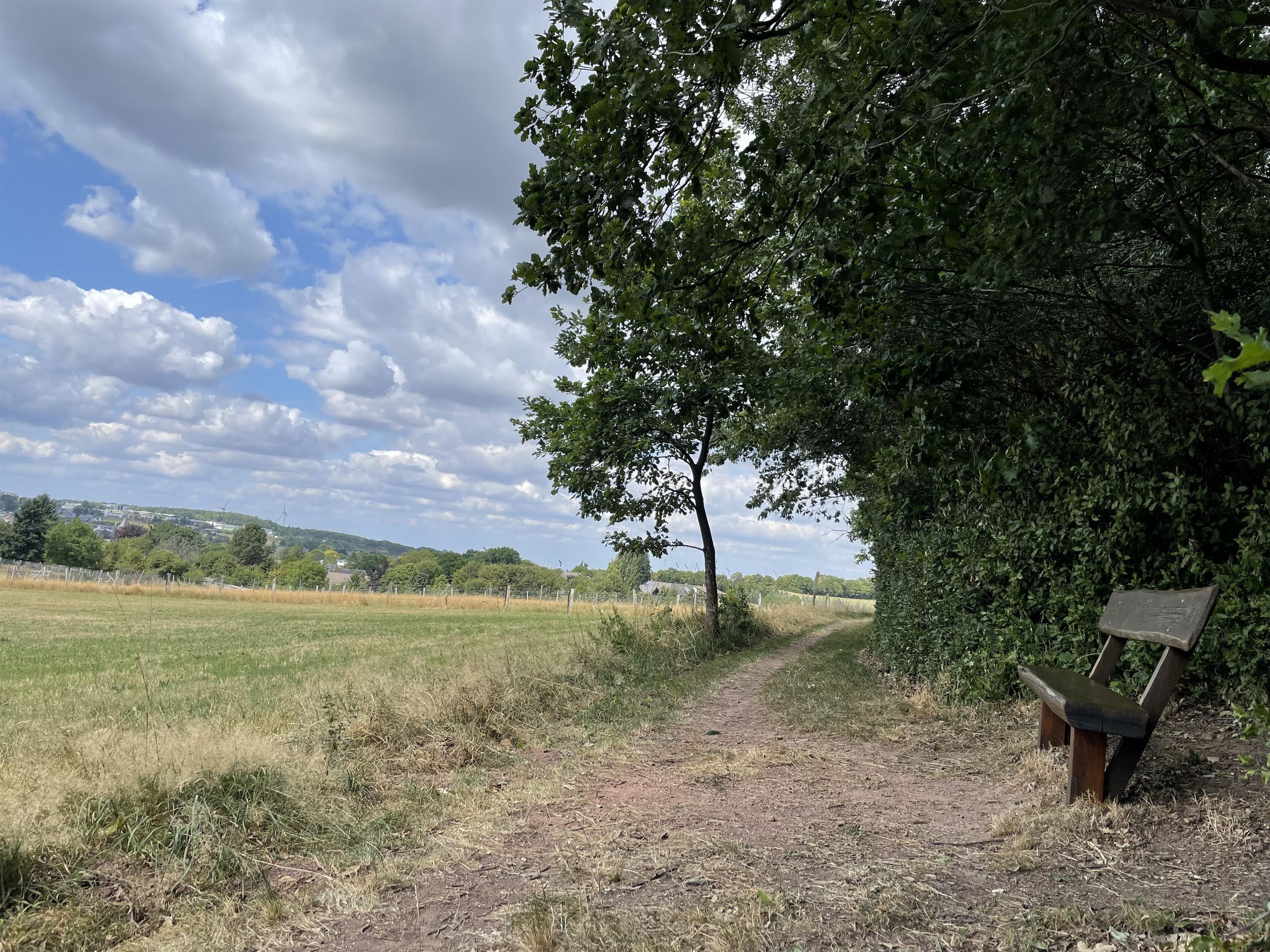
Mausbacher Pestkreuz
Stolberg
At the Thirty Pieces of Silver
On July 9, 2003, Pastor Norbert Bolz consecrated the new plague cross during a small ceremony. It is believed to be the only cross of its kind in Stolberg.
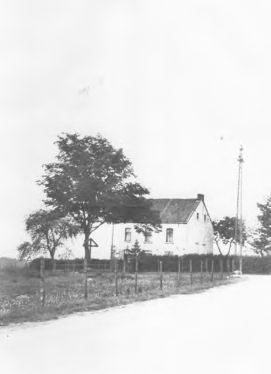
The current cross replaces an older one from 1929, crafted by carpenter Franz Johag, which had to be dismantled by the Stolberg municipal maintenance department due to deterioration. This cross, too, had a predecessor: a cross that had been crafted and erected as early as 1843 by the carpenter W. Mohr.
Reason for the Erecting
The reason for the original plague cross was a looming cholera epidemic. In 1843, a special burial ground for cholera victims was established at the site that the residents of Mausbach have always called“An den dreißig Silberlingen” (At the Thirty Pieces of Silver). The plague cross was erected as a cemetery cross and depicts the instruments of Jesus’s Passion —symbols of this scourge of humanity.
Historical Background
In the 19th century, cholera once again threatened humanity. Originally a disease of the Middle Ages, a new epidemic broke out in Southeast Asia in 1817 and spread relentlessly westward. Via pilgrimage routes in the Islamic world, the disease reached Damascus, Mecca, and Jeddah.
It spread northward through Russia, reaching Odessa and Moscow in 1830, where approximately 4,500 people died. Via Königsberg and Danzig, the epidemic continued on to Central Europe, reaching Berlin and Hamburg in 1831, where 1,400 and 1,600 people died, respectively. In 1832, it finally threatened western Germany. Düsseldorf responded with drastic precautionary measures: shipping traffic on the Rhine was suspended, and travelers arriving from infected areas were required to undergo a ten-day quarantine.
Preventive Measures
Since there was no cure for cholera, the key was to avoid contact with the sick—even the dead posed a danger. For this reason, burial grounds and infirmaries were established outside the towns. In Mausbach, this led to the creation of the “Am Burgholz” burial ground for cholera victims, where the first plague cross was erected in 1842. Fortunately, the cemetery was never used.
It is estimated that more than half a million peoplein Germany fell victim to the disease since the spread of cholera began around 1830. Today, the plague cross in Mausbach stands as a memorial to this historic catastrophe.
This route was developed as part of the LEADER-funded project “Quality Initiative for Hiking in Roetgen and Stolberg” with support from the European Union (EAFRD) and the state of North Rhine-Westphalia.
Impressions

Contact
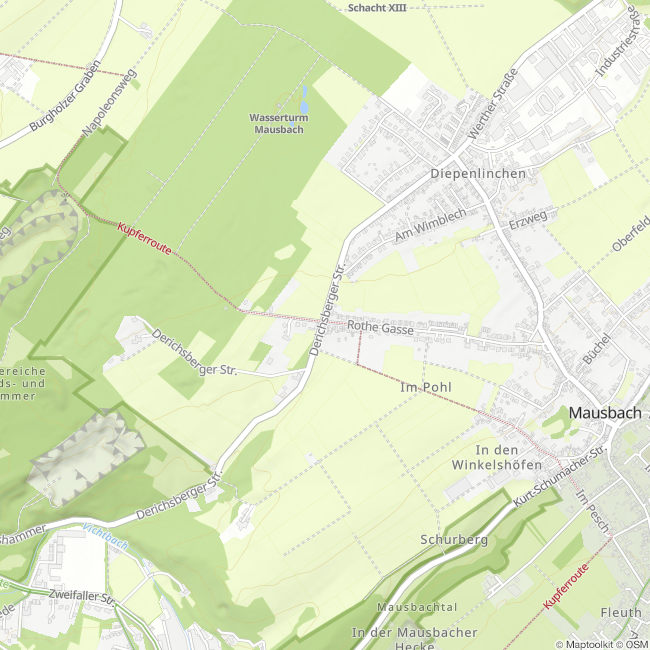
Panoramarundweg Mausbach
52224 Stolberg